 Digestive health since 2008
Learn More About Lactose
Lactose
Learn More About Lactose
Lactose is the natural sugar in mammalian milk. It consists of glucose joined to galactose. Lactase at the small-intestinal lining separates those sugars so the body can absorb them.
Common Sources of Lactose
Milk is the most familiar source of lactose, but dairy ingredients can also appear in packaged foods and medicines. Read the ingredient list for milk powder, whey and milk solids. The amount matters: the presence of a dairy ingredient alone does not tell you the lactose content of a serve.
In the document “Overview Lactose in Food” compares common dairy foods to support a conversation about portion sizes and personal tolerance. Find it in the Educational Materials page.
Milk and Dairy Products
Cow’s, goat’s and sheep’s milk all contain lactose. Processing changes the amount left in yoghurt, cheese, cream and other dairy foods, so it is more useful to compare individual products than to treat all dairy as equivalent.
- Whole Milk, Semi-Skimmed Milk, Skim Milk, and Buttermilk
- Goat's Milk, Sheep’s Milk, Mare’s Milk (Horse Milk)
- Soft Goat and Sheep Cheeses
- Chocolate Milk, Yogurt Drinks, and Fruit-Based Dairy Beverages
- Fresh and matured cheeses: fresh cheeses may contain more lactose, while many hard, well-matured cheeses contain very little. Check the individual product rather than assuming all cheese is lactose-free.
- Yogurt, Kefir
- Custard, Porridge, Pudding, Mousse
- Whipped Cream, Sour Cream and Crème Fraîche
Fermented dairy products such as yoghurt, kefir, and quark may contain less lactose because the starter cultures use some of it during fermentation. The final amount varies; fermented does not necessarily mean lactose-free.
Processed Foods- ==
Baked goods, soups, sauces and confectionery may use milk ingredients for texture or flavour. On Australian labels, check both the ingredients and allergen statement. A milk-allergen declaration is about milk protein and is not a measure of lactose.
- Pastries, Cakes, Muffins, and Cake Mixes
- Many Types of Candy, Especially Milk Chocolate and Sweetened Candies
- Processed Soups (Such as Cream or Dairy-Based Soups) and Sauces
- Dressings and Mayonnaise
- Diet Shakes, Protein Powders, and Meal Replacement Drinks
- Prepackaged Meals
- Ready-to-Use Baking Mixes
- Breakfast Cereals and Muesli
- Processed Meats
- Chips and Snack Foods
Medications and Supplements
Lactose may be added to medications and supplements as a binder or filler.
How Lactose is Digested
Digestion of Lactose
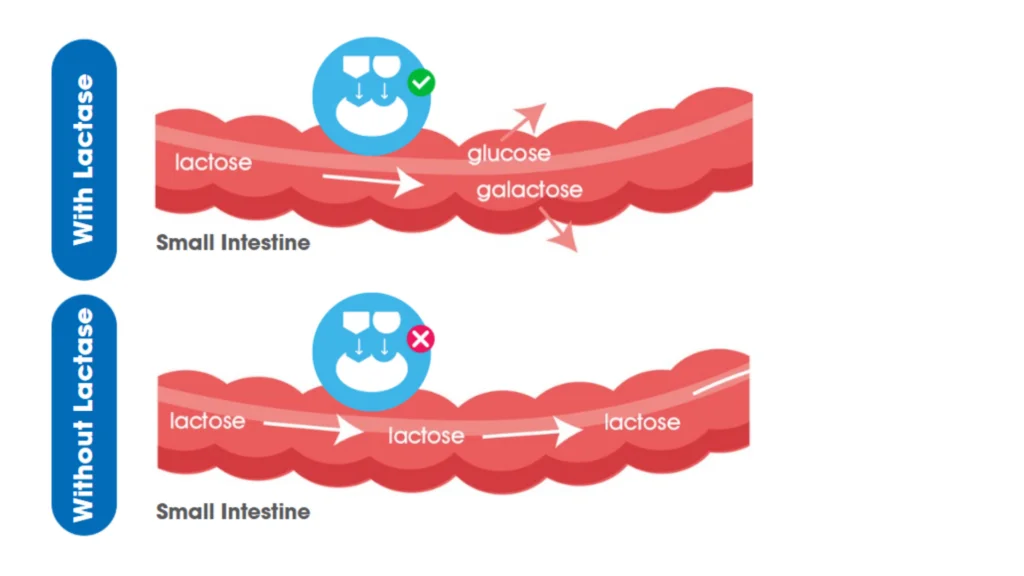
Lactase works at the surface of the small intestine. It breaks lactose into glucose and galactose, which can cross the intestinal lining and enter the circulation. This is one specific step within the wider process of digestion.
Lactose Intolerance
When lactase activity is insufficient for the lactose eaten, some lactose reaches the large bowel. Bacteria ferment it, producing gas, and the poorly absorbed carbohydrate also affects water movement. This can contribute to symptoms in susceptible people.
The fermentation of lactose can lead to a range of symptoms, including bloating, flatulence, and abdominal discomfort.
- Gas Production: Fermentation produces gases, including hydrogen. The response depends on the amount of lactose, the gut microbiome and how sensitive the bowel is to stretching.
- Water Retention: Fermentation may also pull water into the intestines, which can contribute to changes in bowel movements.
- Symptoms: These changes may cause bloating, wind, cramps or diarrhoea. Similar symptoms can occur for other reasons, so an assessment is preferable to self-diagnosis.
It is also possible to take the enzyme Lactase in supplement form with lactose-containing food when appropriate. Products differ in activity and format, so check the Australian directions. Lactase does not remove milk proteins and is not a treatment for cow’s milk allergy.
Dietary Advice for a Low-Lactose Diet
A temporary reduction in lactose may form part of a dietitian-led FODMAP assessment or a separate lactose assessment. The aim is to identify a useful personal limit, not necessarily to avoid dairy indefinitely.
Lactose is primarily found in milk and dairy products, which also provide other important nutrients such as calcium, vitamin B12, vitamin D, and protein. If dairy intake is reduced, plan how to replace the nutrients it normally supplies. An Accredited Practising Dietitian can help with suitable Australian supermarket choices.
Alternatives to Milk and Dairy
Lactose-free dairy is one option for keeping familiar foods in the diet. Some people tolerate smaller serves of ordinary dairy with meals. Home use of lactase drops must follow the product instructions and should not be assumed to remove every trace of lactose.
Plant-based drinks vary considerably in protein and fortification. Compare labels for calcium and other nutrients rather than assuming almond, oat and soya drinks are nutritionally interchangeable with dairy milk.
The Monash University FODMAP Diet App
The Monash University FODMAP app provides food and portion information relevant to a structured FODMAP plan. Use it alongside professional advice, especially when adjusting several food groups.