 Digestive health since 2008
How to Use Lactase
Lactase
How to Use Lactase
Lactase helps split lactose, the sugar found in dairy foods. The Australian range includes meal-time tablets and liquid drops for suitable dairy preparations. The choice depends on the food, how you plan to use the product and the directions for that particular format.
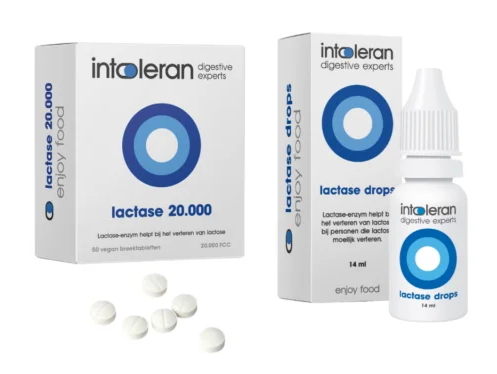
- Lactase 20,000: Each whole tablet supplies 20,000 FCC units of lactase. Check the Australian pack for its serving directions.
- Half a tablet provides 10,000 FCC units. Tablet portions should follow the directions for the product you have.
- Lactase Drops: Liquid lactase for reducing lactose in suitable dairy foods, following the preparation instructions on the bottle.
How the Digestive Enzyme Lactase Works
On the lining of the small intestine, lactase separates lactose into glucose and galactose. These smaller sugars can then be absorbed. People who produce less lactase may leave some of the lactose in a meal undigested.
Supplemental lactase supplies an additional source of the enzyme. When it is used appropriately with lactose-containing food, it can assist lactose breakdown before the food reaches the large bowel. The response depends on the individual, the meal and the product used.
Scientific studies on lactase supplementation have measured breath hydrogen after a lactose challenge. A reduction can indicate that less lactose reached the bowel for fermentation. Results from a study do not predict every person’s response, and a supplement trial is not a diagnosis.
You can find more scientific research on the digestive enzyme lactase and its role in lactose intolerance in the document “Scientific Background Enzymes.” Download it from the Educational Materials page.
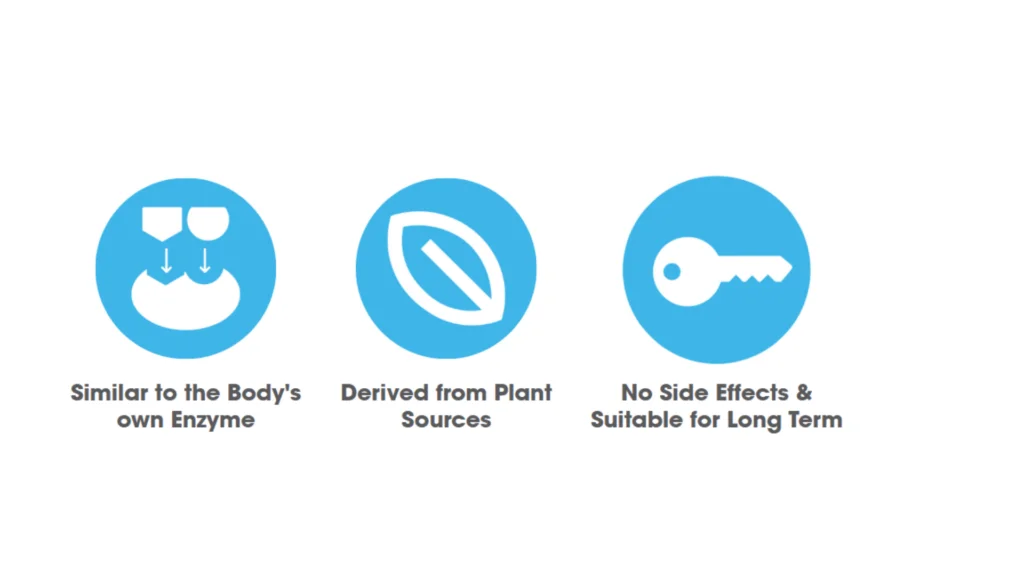
The “Lock-and-Key Principle” of Digestive Enzymes
Lactase has a specific task: splitting lactose. It does not digest gluten, remove milk proteins or treat a food allergy. Specific enzyme activity does not mean a supplement is suitable for everyone; check its other ingredients and seek advice if you experience an unwanted reaction.
Differences and Features of Lactase Supplements-
Compare the enzyme activity, product format and instructions together. A tablet used with a meal serves a different purpose from drops added to dairy during preparation. The sections below retain those distinctions so you can choose the relevant guide.
Lactase 20,000
These tablets contain the lactase activity stated on the Australian pack (20,000 FCC per whole tablet). They are designed to be divided, so the serving can be adjusted within the product directions.
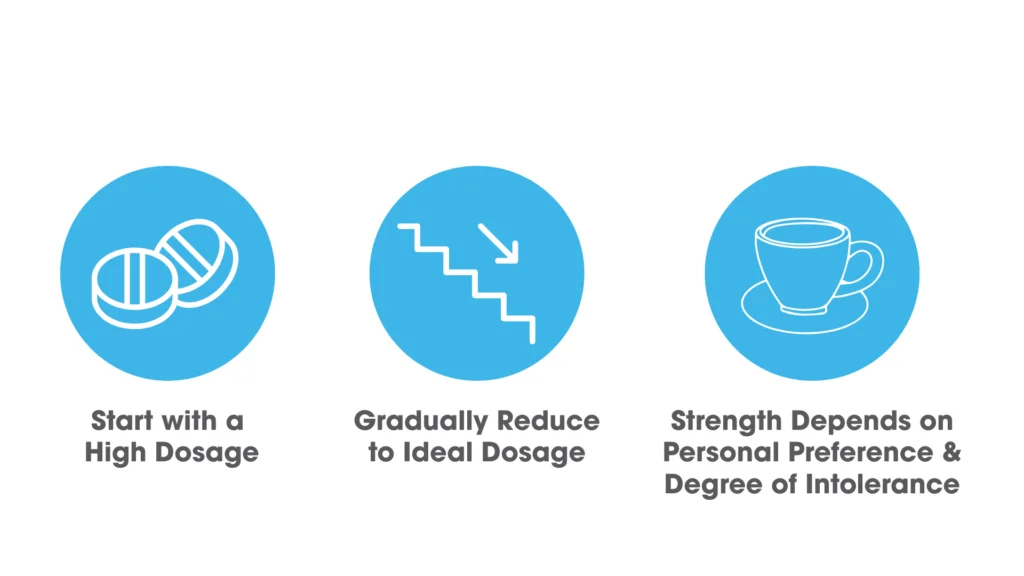
- High Dosage: A whole tablet contains 20,000 FCC units; the number describes enzyme activity rather than tablet weight.
- Dosage Recommendation: The Australian product listing directs adults to take a quarter to one tablet immediately before lactose-containing food or drink, with a maximum of 10 tablets daily. Check your current pack before use.
- How to Take: Swallow with water immediately before the lactose-containing meal or drink, following the pack instructions.
- Use: Consider the amount of lactose in the meal and the Australian directions. Improvement or lack of improvement with an enzyme does not confirm or exclude lactose intolerance; persistent symptoms need assessment.
- Alternative Option: If swallowing is difficult, ask a pharmacist which format is appropriate. Drops used to prepare food have different directions from meal-time tablets.
The 20,000 FCC tablet provides a concentrated lactase format. Use the amount directed for your circumstances rather than assuming that more is always needed.
Consider the food, usual portion and product instructions when comparing lactase options.
How to Use Lactase Tablets
Start by checking the exact pack in your hand. Strength, ingredients and directions can vary between countries and formats. The Australian product pages linked from this guide provide the local information.
The number in a lactase product name usually refers to its enzyme activity. For example, a Lactase 20,000 tablet provides 20,000 FCC units. Compare the same units when looking at different products.
FCC stands for Food Chemicals Codex, a reference used when describing enzyme activity. For lactase, the FCC figure helps compare activity under specified test conditions; it does not give a guaranteed personal tolerance or a fixed number of dairy serves.
1. Check the Australian Serving Directions
Use the serving range on the Australian label and consider the amount of lactose in the meal. Ask a pharmacist or dietitian if you are unsure which format suits you. Do not use a high-dose supplement trial to diagnose the cause of symptoms.
2. Take Capsules/Tablets Along With the Meal
Timing matters because the enzyme needs to meet the lactose in the digestive tract. Follow the pack directions for use immediately before food or drink rather than taking the product well after the meal.
3. Keep in Mind the Short Duration of Enzyme Activity
The Australian Lactase 20,000 listing describes an approximate activity period of 30–45 minutes. If eating again later, consult the pack directions and maximum daily amount instead of assuming the earlier serving still covers the new meal.
When reviewing a response, check timing, the amount of dairy, the serving used and whether symptoms might have another explanation.
- Gas Production: Bacteria can produce gas while fermenting lactose that reaches the large bowel. The amount of gas and how it feels vary between people.
- Water Retention: Poorly absorbed lactose can also increase water in the bowel and affect stool consistency.
- Symptoms: Bloating, wind, cramping and diarrhoea can occur, but these symptoms also have causes unrelated to lactose.
It is also possible to take the enzyme Lactase in supplement form with lactose-containing food. Commercial lactase may be produced using microorganisms. Check the complete ingredient list, and remember that an enzyme product is not a substitute for investigating unexplained symptoms.
How to Use Lactase Drops
Our Lactase Drops contain a liquid form of the lactase enzyme, intended for use with suitable dairy foods according to the preparation instructions. They can be useful when planning dairy-based cooking at home.
How Lactase Drops Work
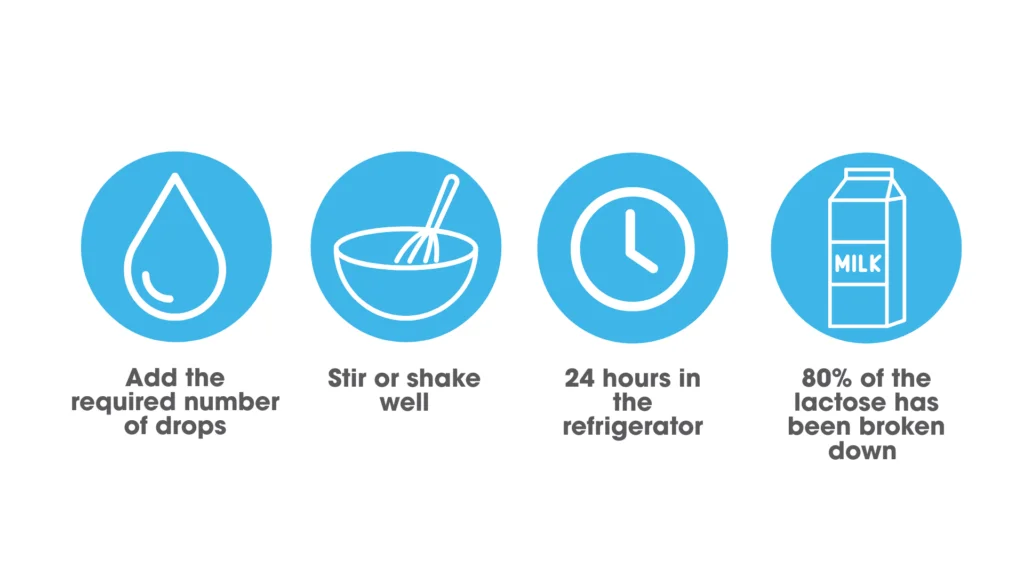
The drops supply lactase to split lactose in the food before it is eaten. The result depends on the amount used, temperature, food and contact time. A home preparation should not automatically be described as completely lactose-free.
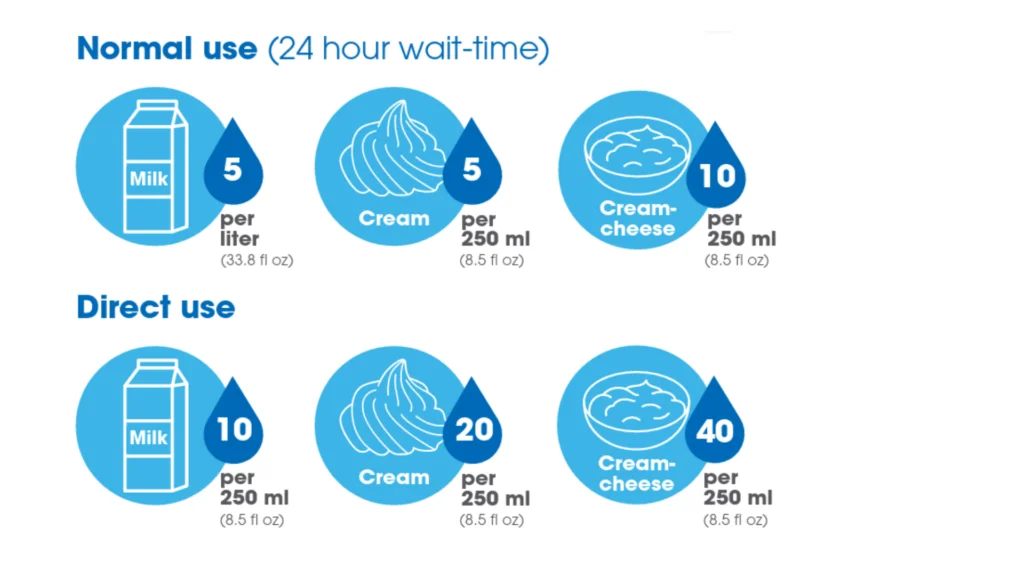
- Standard Dosage: Measure the food and use the number of drops specified on your Australian bottle for that quantity.
- Waiting Time: Follow the stated treatment time and keep perishable dairy refrigerated. Using drops does not extend the food’s safe storage period.
Note: Lactase drops are not suited to every dairy product. Acidic foods such as yoghurt, sour cream and buttermilk may need a different approach; check the bottle instructions or ask a pharmacist.
How Many Drops Do You Need?
Do not transfer a dose from milk to a different recipe without checking the instructions. Food composition, temperature and the available preparation time can affect the treatment process.
Use in Babies and Young Children
Before using drops with an infant’s milk or formula, speak with a doctor, pharmacist or appropriately qualified health professional. Feeding symptoms can have several causes, including milk-protein allergy, which lactase does not treat.
- Dosage: For infants and young children, obtain directions for the exact product and feeding situation rather than applying an adult dairy-preparation ratio.
Milk handling and feeding instructions still apply. Do not change formula concentration or feeding preparation on the basis of an enzyme guide.
Excessive heat can inactivate lactase. Follow the temperature limits on the product label and allow heated food to cool as directed before adding drops.