 100-day satisfaction guarantee*
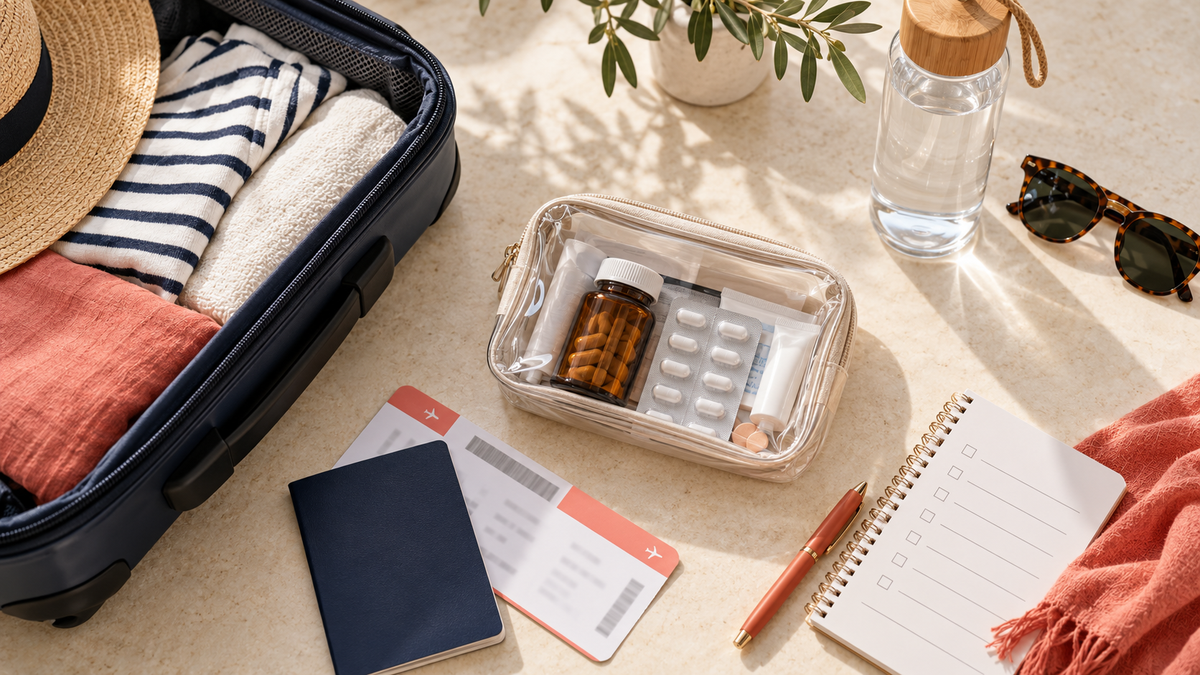
Travelling can change meal timing, storage conditions and access to familiar foods. A little preparation makes it easier to carry digestive enzyme products responsibly—without assuming that a product’s Australian status or packaging will be treated the same way in another country.
Start with the exact product
Write down the product name, ingredients, directions and the amount you plan to carry. Keep the product in its original labelled packaging, and check the expiry date before you leave. If a product has an AUST L or AUST R number, that identifies its Australian therapeutic-goods entry; it does not automatically confirm that the product is permitted in every destination.
Digestive enzyme products are designed for specific food components and should be used according to their label. They do not replace medical advice, a balanced diet or allergy precautions. If you are unsure which product is relevant to your needs, speak with a pharmacist, GP or Accredited Practising Dietitian before travel.
Check destination and transit-country rules
Countries regulate medicines and supplements differently. A product sold as a complementary medicine in Australia may be treated differently elsewhere. Check the official embassy, consulate or medicines-regulator information for every country you will enter—including airport transit stops—well before departure.
The Therapeutic Goods Administration’s advice for leaving Australia recommends checking the rules of your destination and carrying documentation where needed. Smartraveller’s medicines guidance is another useful starting point.
Pack for identification, access and storage
- Keep original packaging: avoid carrying only loose capsules or tablets. If you use a pill organiser, keep the labelled pack with you as well.
- Carry a sensible quantity: take enough for the trip, plus a small delay allowance where lawful. Large quantities can attract additional rules.
- Use hand luggage where permitted: this keeps the product accessible and reduces the risk of loss with checked baggage. Confirm airline and airport-security requirements.
- Follow the storage label: protect products from direct sun, high heat and moisture. A parked car, beach bag or steamy bathroom can be much hotter or damper than expected.
- Keep instructions available: save a clear photo of the label and directions, but retain the physical packaging too.
Do not refrigerate, freeze or decant a product unless its label or the manufacturer specifically directs you to do so.
Plan around unfamiliar meals
A travel kit works best alongside a food plan. Save the names of a few simple meals you usually tolerate, learn the local words for important ingredients, and keep a translation card if you need to communicate an allergy or medically necessary restriction. A digestive enzyme product should never be used as a reason to ignore a food allergy.
For long travel days, pack permitted backup snacks that suit your individual needs and check the food and biosecurity rules for your destination. When eating out, ask specific questions about ingredients, sauces and preparation rather than relying only on a broad label such as “dairy-free” or “gluten-free”. Our guide to eating out with food intolerance has a practical question list.
Returning to Australia
Australia’s traveller exemption allows many medicines and medical devices to be brought in for personal use when the conditions are met, but restrictions and quantity limits apply. The TGA and the Australian Border Force advise travellers to keep medicines in original packaging and declare them on arrival. If you bought a supplement overseas, do not assume it has the same ingredients or regulatory status as an Australian product.
A quick pre-flight checklist
- Confirm the exact product, ingredients, directions and expiry date.
- Check the laws of the destination and every transit country.
- Keep the original labelled packaging and any supporting documentation.
- Pack a lawful quantity and protect it from heat and moisture.
- Keep essential items accessible during travel, subject to security rules.
- Plan familiar meals and backup snacks without treating enzymes as allergy protection.
- Check Australian declaration requirements before the return flight.
When to ask for professional advice
Talk with a pharmacist or doctor if you use prescription medicines, have a diagnosed allergy, are pregnant or breastfeeding, are travelling for an extended period, or need a product requiring temperature control. Persistent, severe or unexplained digestive symptoms also deserve assessment rather than self-diagnosis.
You can browse the current Intoleran Australia range and read our overview of how different digestive enzymes match different food components. Always follow the directions on the specific product you carry.