 Digestive health since 2008
Learn More About Histamine
Histamine
Learn More About Histamine
Histamine is a signalling substance made by the body. It can also occur in food, especially when microbial activity develops during fermentation or storage.
In the body, it is primarily found in mast cells located in the skin, lungs, and intestines.
It contributes to immune signalling, stomach acid secretion and several other normal physiological processes.
Food is only one source of exposure; symptoms cannot automatically be attributed to dietary histamine.
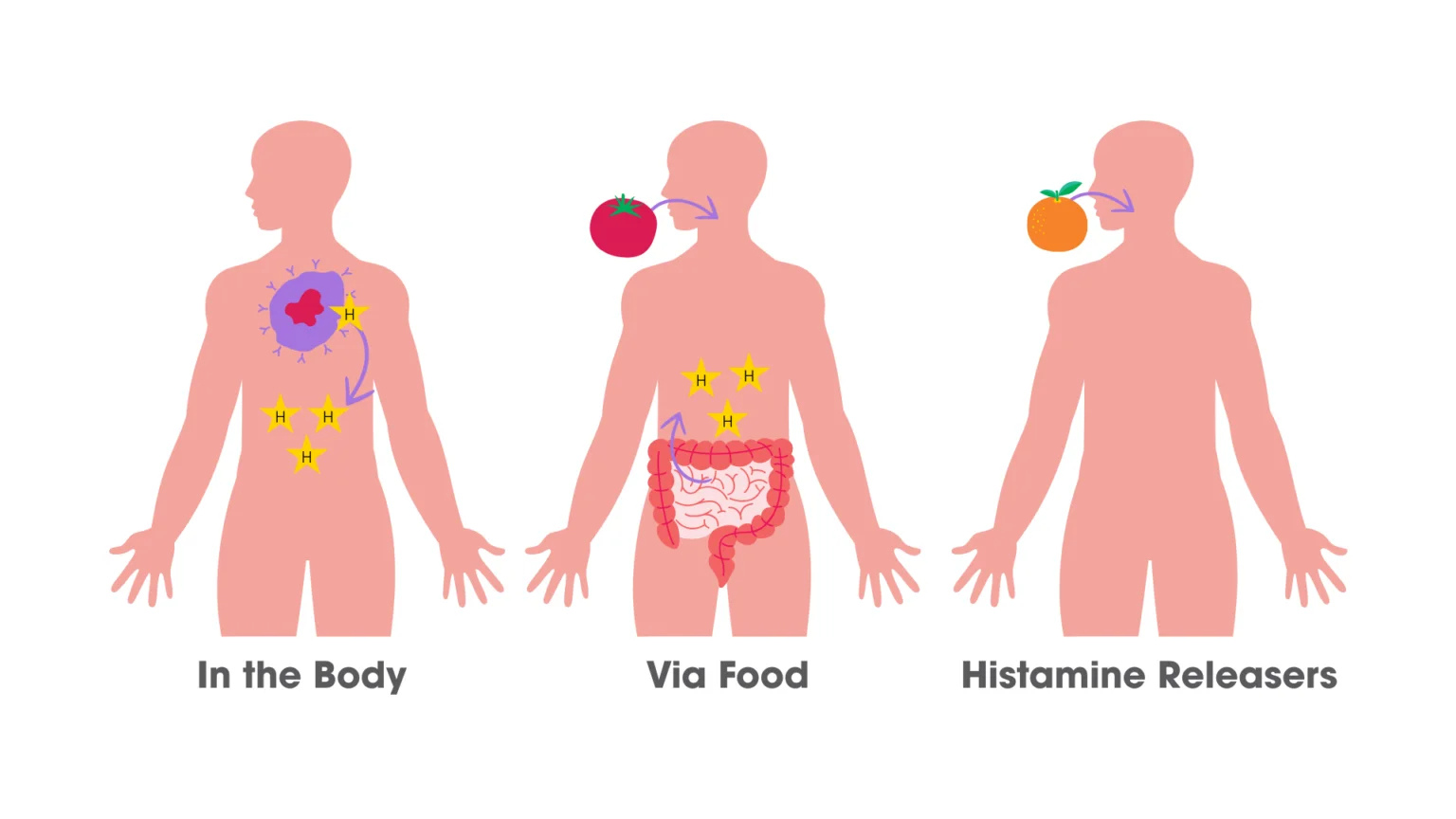
What is histamine?
Histamine is a biogenic amine involved in several normal body functions and present in varying amounts in certain foods.
Mast cells and basophils store histamine, with mast cells present in tissues including the skin, lungs and gut.
Its effects depend on the tissue, receptor and reason for release.
Physiological Role of Histamine
1. Respiratory System:
Histamine released during an allergic reaction can contribute to airway symptoms. Wheeze, throat swelling or breathing difficulty require prompt medical attention; dietary enzymes are not a treatment for these reactions.
This can contribute to symptoms such as shortness of breath, coughing, and wheezing.
2. Cardiovascular System:
Histamine can widen blood vessels and change how easily fluid moves through their walls.
These effects contribute to redness and swelling during immune responses. They are part of a wider system involving many mediators, not proof of a food intolerance.
3. Immune System:
Histamine is one of the mediators involved in allergic and inflammatory responses.
When mast cells release their contents, histamine helps change local blood flow and tissue permeability. The resulting symptoms depend on the trigger and the tissues involved.
4. Nervous System:
Within the nervous system, histamine acts as a neurotransmitter in the brain.
In the nervous system, histamine participates in wakefulness and other signalling pathways. This is distinct from discussing histamine content in a meal.
It also helps regulate appetite by sending signals that influence hunger and satiety.
5. Gastrointestinal System:
In the gastrointestinal tract, histamine plays an important role in digestion.
Histamine signalling stimulates acid secretion in the stomach. Acid is part of normal digestion, although symptoms involving acid have many possible causes.
Difference Between Endogenous and Exogenous Histamine
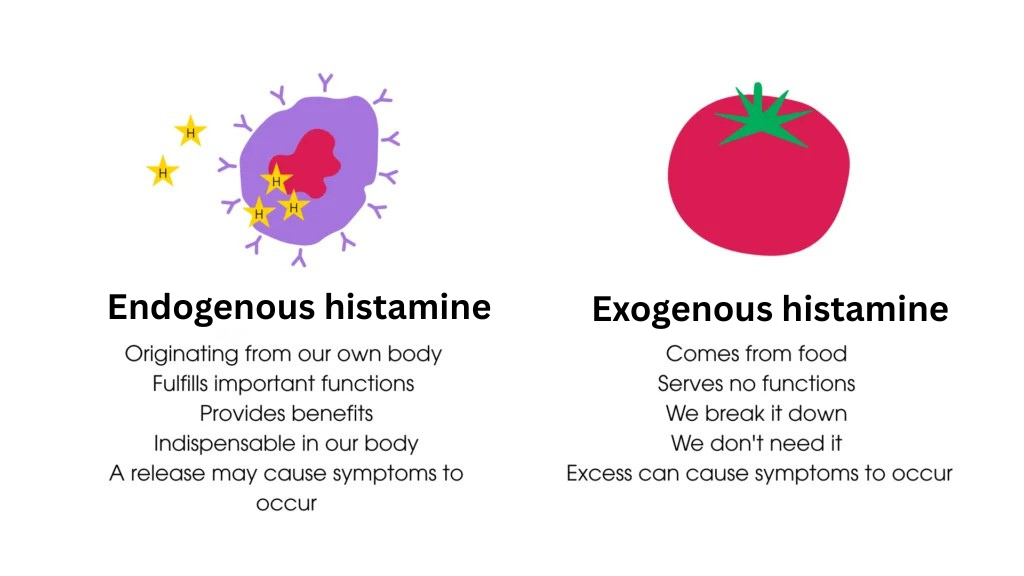
It is helpful to separate histamine released within the body from histamine consumed in food. These are related but not interchangeable situations.
- Endogenous histamine is produced within the body and contributes to normal signalling as well as certain allergic and inflammatory responses.
- Exogenous histamine comes from outside the body, including foods. Intestinal enzymes participate in its breakdown. The proposed relationship between dietary histamine, enzyme activity and symptoms is complex and remains an area of research.
The DAO Enzyme
The DAO enzyme (diamine oxidase) is an important enzyme in the body that helps break down histamine.
DAO is present in the intestinal lining and participates in breaking down histamine outside cells.
What are sources of histamine?
Histamine is formed during the processing, ripening, and storage of certain foods.
This occurs particularly in protein-rich foods such as meat, fish, and dairy products.
Some food lists also describe proposed histamine-releasing foods, but evidence for these categories is inconsistent.
Lists of supposed DAO blockers are not uniform or diagnostic. Treat the examples below as topics for discussion, not a universal instruction to remove every listed food.
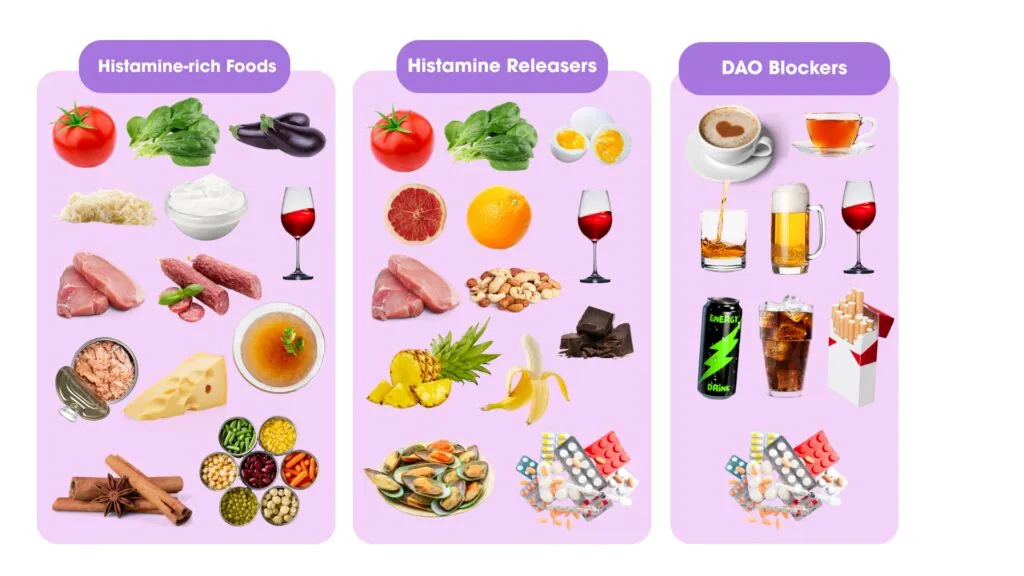
Histamine-Rich Foods
Fermented and aged foods are particularly high in histamine. Examples include:
- Tomato (also classified as a -histamine liberator)
- Spinach (also classified as a histamine liberator)
- Sauerkraut
- Eggplant
- Mushrooms
- Dried fruits
- Yoghurt
- (Pork) meat (also classified as a histamine liberator)
- Aged meats, such as salami and dry-cured sausages
- Fish
- Aged cheeses
- Broth
- Alcohol, particularly red wine
- Canned foods
- Certain spices, such as cinnamon, nutmeg, and vanilla
Histamine Releasers
These foods appear on some proposed histamine-liberator lists. Such lists vary considerably, and inclusion does not mean that the food triggers symptoms in every person.
Foods that are known to act as histamine releaser include:
- Citrus fruits, strawberries, bananas, and pineapples
- Eggs (particularly egg whites)
- Shellfish and crustaceans
- Nuts, including peanuts
- Sourdough bread
- Chocolate
- Alcohol
Some medications can stimulate the release of additional histamine in the body, including:
- Painkillers (morphine, pethidine, codeine, metamizole, anti-inflammatory drugs, acetylsalicylic acid)
- Antibiotics (D-cycloserine, chloroquine, pentamidine)
- Anti-hypotensives (dobutamine)
- Antihypertensives (verapamil, alprenolol)
- Cytostatics (cyclophosphamide)
- Diuretics (amiloride)
- Iodine-containing contrast agents
- Local anesthetics (mesocaine, procaine, marcaine, prilocaine)
- Muscle relaxants (D-tubocurarine)
- Narcotics – anesthetics (barbiturates, thiopental sodium)
DAO Blockers
Coffee, tea and energy drinks may affect symptoms for reasons including caffeine, independently of histamine. Evidence for categorising all of them as DAO blockers is limited; review individual responses with a clinician.
Alcohol can also impair or block the activity of the DAO enzyme.
There is also a list of medications that can significantly reduce DAO activity, including:
- Quinidine
- Antimalarials (chloroquine)
- Bronchodilators (aminophylline, theophylline)
- Diuretics (furosemide)
- Mucolytics (N-acetylcysteine, ambroxol)
- Muscle relaxants (alcuronium chloride, pancuronium, tubocurarine chloride)
- Antiseptics (acriflavine chloride)
- Antiarrhythmics (verapamil, propafenone)
- Antibiotics (cefuroxime, cefotiam, clavulanic acid, doxycycline, isoniazid, neomycin)
- Painkillers (metamizole)
- Antidepressants and psychiatric medications (amitriptyline, diazepam, monoamine oxidase inhibitors [MAOIs], haloperidol)
- Antiemetics (metoclopramide)
- Antihistamines (promethazine, cimetidine)
- Antihypertensives (dihydralazine)
The histamine food resource provides a starting point for discussion. Food values vary with freshness, fermentation, storage and testing, so a printed category is not a guaranteed content measurement.
You can download this document from the Educational Materials page.
How Is Histamine Broken Down in the Body?
Histamine can be broken down through different pathways, depending on its location in the body.
Two pathways commonly discussed are diamine oxidase (DAO) and histamine N-methyltransferase (HNMT).
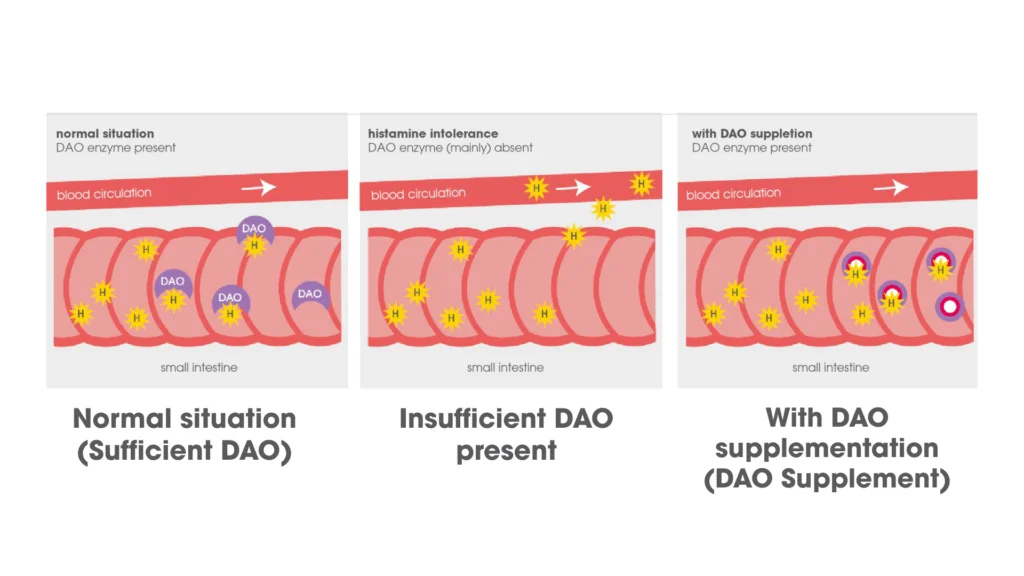
DAO and HNMT act in different locations. DAO contributes to extracellular histamine breakdown, including at the intestinal lining, while HNMT acts within cells. Neither pathway provides a simple symptom-based diagnosis.
Extracellular Breakdown of Histamine
Intestinal DAO forms part of the handling of dietary histamine. Measuring or supplementing an enzyme does not, by itself, establish why someone has symptoms. A clinical assessment should consider other explanations too.
Intracellular Breakdown of Histamine
HNMT acts inside cells and is present in several tissues. Its role differs from the intestinal use proposed for oral DAO supplements.
It should not be treated as interchangeable with DAO when discussing how supplements might act.
DAO Supplementation
Some products supply DAO for use with food. Evidence and suitability depend on the clinical situation; these products are not treatments for food allergy or anaphylaxis..
How Does the Histamine Elimination Diet Work?
A histamine elimination diet is a temporary diet consisting of three phases.
If a clinician recommends a dietary trial, agree on its duration, the foods being tested and how the response will be recorded.
Reintroduce foods systematically to discover which restrictions, if any, are useful for the individual.
The longer-term goal is an adequate, varied diet with only the restrictions that prove helpful. Review the need for any supplement separately.
Phases of the Histamine Elimination Diet:
1. Elimination Phase:
Avoid a prolonged, unsupervised exclusion diet. An Accredited Practising Dietitian can help plan a short, nutritionally adequate trial where appropriate. DAO supplementation is not automatically required, and the current Australian label and clinical advice should guide any use.
The information sheet “List Histamine in Food” can be a helpful resource.
2. Reintroduction Phase:
By this stage, the body’s histamine levels should be lowered.
During reintroduction, vary one main factor at a time and record symptoms, portions and storage details. This helps separate a reproducible pattern from day-to-day fluctuation.
3. Personalised Diet Phase:
Use the results to build a practical eating pattern and reassess unnecessary restrictions. Whether a DAO product has a useful role is an individual question, not a requirement for everyone.
Discuss occasional and regular supplement use separately with a pharmacist, doctor or dietitian.
Low-Histamine Foods
A personalised plan should retain as much food variety as possible rather than treating lengthy online avoid lists as universal rules.
A general rule is that the longer a product is stored, the more histamine it produces.
Safe cooling, refrigeration and storage remain important. Reheating does not reliably remove histamine already present in a food.
Prompt freezing can limit further microbial activity during storage, but it does not remove histamine that has already formed.
Complications with a Histamine Elimination or Low-Histamine Diet
Long-term restriction without review can reduce dietary variety and make nutritional adequacy harder to maintain.
The nutrients affected depend on what has been removed. Review energy, protein, fibre, calcium, iron and other needs with a qualified dietitian.
Replace excluded foods thoughtfully and revisit the reasons for exclusion rather than relying on supplements to compensate for an unnecessarily narrow diet.
In this respect, a low-histamine diet shares similarities with vegetarian or vegan diets.
As with those diets, supplementation with vitamin B12 is recommended to help prevent deficiencies.