 100-day satisfaction guarantee*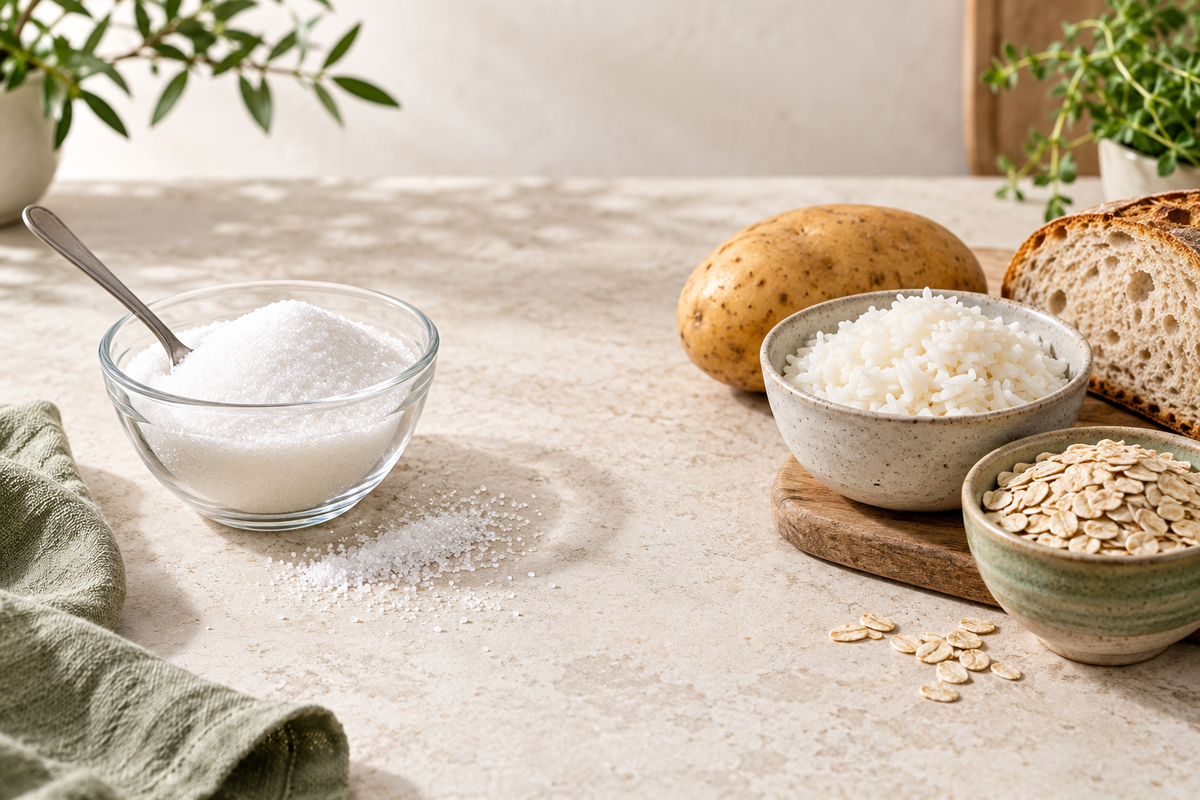
Sucrose and starch are both carbohydrates, but they are not the same substance and the body does not digest them in exactly the same way. Understanding the distinction can make food records, label reading and conversations with a healthcare professional much clearer.
Sucrose is a two-sugar molecule
Sucrose is ordinary table sugar. It is a disaccharide made from one glucose molecule joined to one fructose molecule. In the small intestine, the sucrase part of the sucrase-isomaltase enzyme complex separates sucrose into glucose and fructose so they can be absorbed.
Sucrose occurs naturally in foods such as some fruits and vegetables and is also added to many foods and drinks. On an Australian nutrition information panel it contributes to total carbohydrate and sugars, but it is not always listed by name. Check the ingredient list for terms such as sugar, cane sugar or sucrose when the specific source matters to you.
Starch is a chain of glucose units
Starch is a polysaccharide: a much larger carbohydrate built from many glucose units. Potatoes, rice, bread, pasta, oats and other cereals are familiar sources.
Starch digestion begins in the mouth, where salivary amylase starts breaking long chains into smaller pieces. Pancreatic amylase continues the work in the small intestine. Enzymes on the intestinal brush border, including maltase-glucoamylase and sucrase-isomaltase, then help complete the breakdown into absorbable glucose.
Why the distinction matters
Difficulty digesting sucrose does not automatically mean every starchy food will cause the same response, and the reverse is also true. Sucrase-isomaltase contributes to both sucrose digestion and part of the final stage of starch digestion, so the degree of overlap can vary.
Congenital sucrase-isomaltase deficiency, often shortened to CSID, is a rare genetic condition. Reduced enzyme activity can also occur for other reasons, but digestive symptoms alone cannot establish the cause. Bloating, abdominal discomfort, wind and altered bowel habits overlap with many gastrointestinal conditions.
If symptoms are persistent, new or affecting nutrition, speak with your GP and an Accredited Practising Dietitian. Testing and management should be individualised rather than based on an online symptom list.
Cooking changes texture, not the basic category
Cooking can soften starch granules and make them more accessible to digestive enzymes. Cooling some cooked starchy foods can also increase the proportion of resistant starch. These changes may affect digestion, but cooking does not simply remove all starch.
Likewise, baking or boiling a food that contains sucrose does not automatically make the sucrose disappear. Recipes, processing, serving size and the rest of the meal all matter.
A practical way to investigate patterns
- Name the exact food. Record “150 g cooked potato” rather than only “starch”.
- Include the amount and preparation. Note whether it was boiled, baked, cooled and reheated, or part of a mixed dish.
- Read both panels. Use the ingredient list to identify added sugars and the nutrition information panel to understand total carbohydrate and sugars.
- Change one variable at a time. A simpler meal makes a personal pattern easier to interpret than changing several foods at once.
- Keep comfortable meals in the record. Foods and portions that are well tolerated are just as useful as meals linked with symptoms.
Where digestive-enzyme products fit
Different enzymes act on different carbohydrate bonds, so an enzyme product should be matched to the carbohydrate in question. It should not be used to diagnose an intolerance or replace appropriate medical and dietetic advice.
If you are comparing options for sucrose and starch digestion, review the current ingredient list and directions for Starchway 50 capsules or Starchway 150 capsules. Follow the product label and seek professional advice if you have a diagnosed condition, take medicines, are pregnant or are planning use for a child.
When to seek prompt advice
Seek medical advice promptly for blood in the stool, unexplained weight loss, fever, repeated vomiting, significant dehydration, persistent night-time symptoms or severe pain. These are not symptoms to self-manage as a presumed food intolerance.