 100-day satisfaction guarantee*
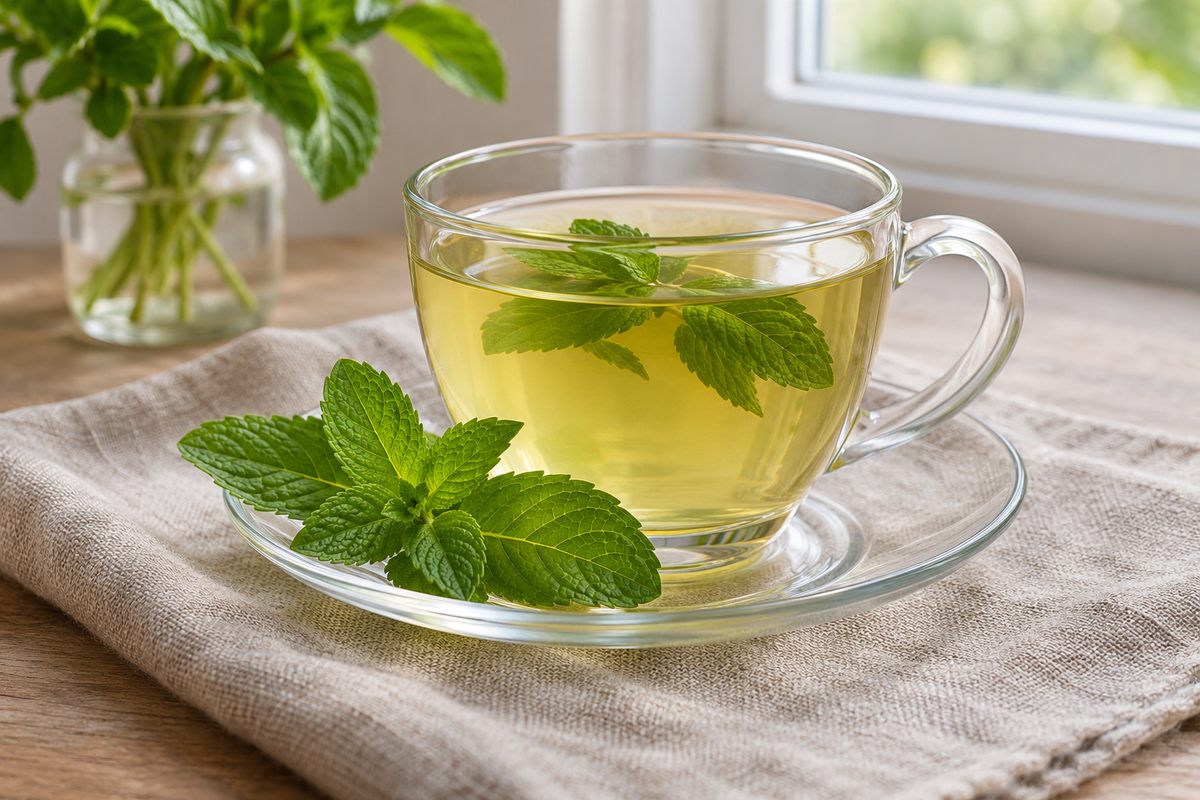
A cup of peppermint tea might be part of your after-dinner routine. But when you hear that peppermint has been studied for irritable bowel syndrome (IBS), check what the researchers actually gave participants. A leaf infusion and a capsule containing concentrated oil are different preparations.
What the trials found
Much of the IBS research concerns peppermint oil, including enteric-coated capsules designed to release their contents after passing through the stomach. A review of randomised trials found that peppermint oil may improve overall symptoms and abdominal pain in some people with IBS. The authors rated the certainty of the evidence very low and found that side effects were more frequent than with placebo. Individual trials have also reported mixed results.
What that tells us about a cup of tea
Research on peppermint leaf is limited. The oil studies do not establish that tea has the same effect, and they cannot tell you how strong to brew it or how many cups to drink for symptoms. If you enjoy a cup and it suits you, treat it as a drink. Avoid adding concentrated essential oil to tea to imitate a trial preparation.
What to check before using capsules
Peppermint oil taken by mouth can cause heartburn. If reflux is already an issue, or if you take medicines or are considering the product for a child, talk with a pharmacist or GP first. Take the actual packaging so they can check the formulation and directions.
If digestive symptoms are new, persistent or changing, arrange a medical review before assuming IBS or changing several foods. A short food and symptom diary can help describe a pattern. Our gut–brain connection guide covers another part of IBS care.