 100-day satisfaction guarantee*
Ideas for everyday eating
Lactose-free, dairy-free and milk allergy: what the labels mean
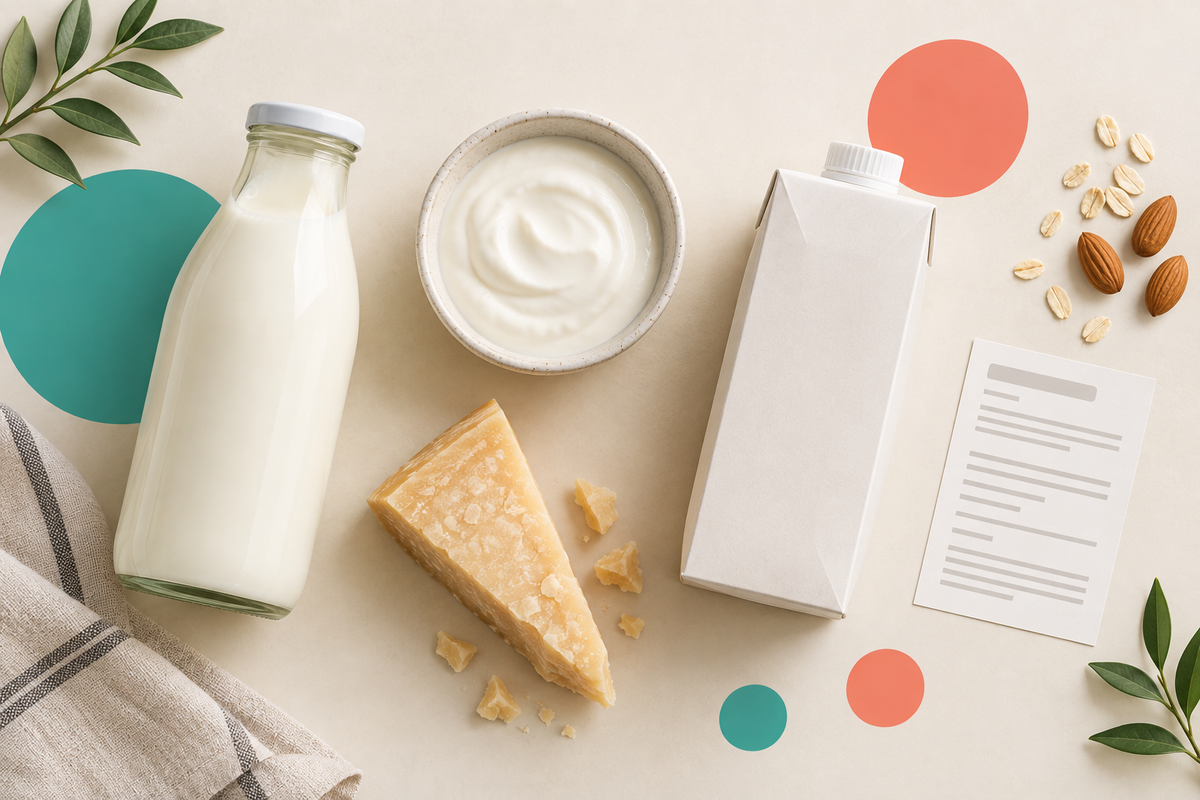
“Lactose-free”, “dairy-free” and “milk-free” can look interchangeable on a shopping list, but they answer different questions. Knowing which term matters to you makes labels easier to check and helps avoid either unnecessary restriction or an unsafe substitution.
Start with the food component
Lactose is the natural sugar in mammalian milk. The enzyme lactase normally breaks it down in the small intestine. When a person does not make enough lactase, lactose can pass into the large intestine and contribute to wind, bloating, abdominal discomfort or diarrhoea. Symptoms and the amount tolerated vary between people.
Cow’s milk allergy is different. It is an immune reaction to milk proteins. A product can have little or no lactose and still contain those proteins. The Australian Healthdirect guide to lactose intolerance and the Australasian Society of Clinical Immunology and Allergy both emphasise that lactose intolerance should not be confused with milk allergy.
What “lactose-free” tells you
A lactose-free dairy product is made to contain very little lactose, often by adding lactase so the lactose is split into simpler sugars. It may still be made from cow’s milk and can still contain milk proteins such as casein and whey.
That makes “lactose-free” relevant to lactose, not a shortcut for milk-allergy safety. It also does not automatically tell you whether a food suits a vegan diet or another dietary restriction.
What “dairy-free” or plant-based tells you
Plant-based drinks, yoghurts and desserts are made without dairy ingredients, but the base can be soy, almond, oat, rice, coconut or another ingredient. Each brings its own allergen, nutrition and food-intolerance considerations. Products in the same category can also differ in added fibres, sweeteners and gums.
Rather than relying on the front-of-pack wording alone, check the ingredient list and allergen statement every time—especially after a packaging or recipe change.
How Australian allergen labels help
Under Australia and New Zealand’s plain-English allergen-labelling rules, milk must be declared by name when it is present. On packaged food, look for milk in bold in the ingredient list and for a nearby summary beginning with “Contains”. The FSANZ allergen-labelling guide explains the current format.
A voluntary “may contain milk” statement refers to possible unintended presence during manufacture. Anyone managing a diagnosed food allergy should follow their allergy specialist’s advice about precautionary statements and cross-contact.
A five-step label check
- Name the issue: are you checking lactose, milk protein, another allergen, a FODMAP plan or several things at once?
- Read the ingredient list: do not stop at a “free from” claim on the front.
- Check the allergen summary: in Australia, “Contains milk” is the clearest quick check for milk as an allergen.
- Scan the rest of the recipe: a lactose-free product may still include ingredients relevant to you, such as inulin, polyol sweeteners, nuts or gluten-containing cereals.
- Recheck familiar products: formulations and manufacturing statements can change.
Ordering food away from home
Use specific language. “I avoid lactose” and “I have a milk allergy” are not the same instruction. Ask whether a dish contains milk, butter, cream, cheese, whey or other milk-derived ingredients, and ask about cross-contact if allergy is involved. If staff cannot confirm the ingredients, choose another option.
Avoid removing more than you need
Lactose tolerance varies. Healthdirect notes that many people do not need to permanently remove every source of lactose, while anyone reducing dairy broadly should still consider calcium and other nutrients. A GP or Accredited Practising Dietitian can help confirm the problem and plan a nutritionally adequate diet.
If a qualified healthcare professional has confirmed lactose intolerance, our lactase range shows the available Australian tablet and drop formats; always check the individual product directions. Lactase products are not a treatment for milk allergy. You can also read why the distinction between food allergy and intolerance matters.
Seek urgent medical help for symptoms of a serious allergic reaction. In Australia, call 000.