 100-day satisfaction guarantee*
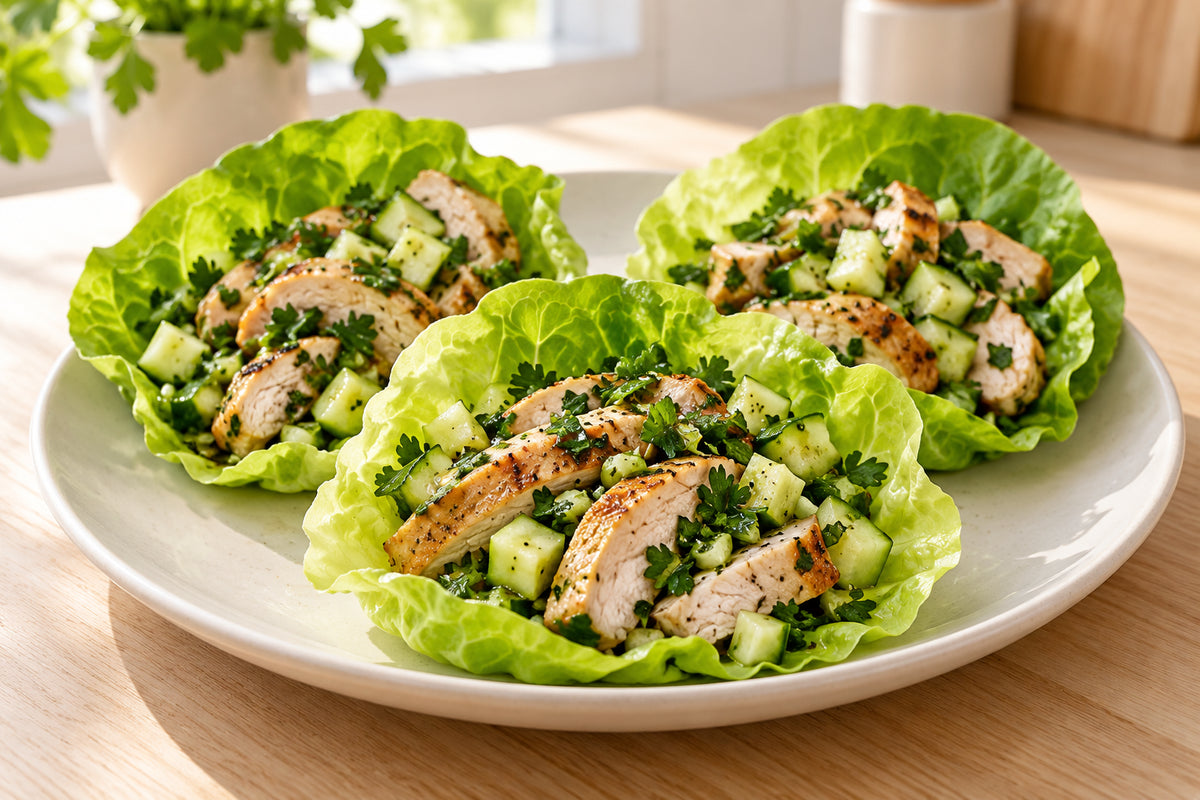
Warm chicken, crisp cucumber and soft lettuce make a simple lunch base. Parsley and olive oil provide flavour without a bottled dressing or wrap.
Dietary context: CSID tolerance to sucrose and starch differs. Adapt this meal idea with your dietitian; it is not a sucrose-free or starch-free prescription. Vegetables contain natural sugars. Follow your established portions and treatment plan.
Meal: Lunch
Serves: 2
Preparation: 15 minutes
Cooking: 12 minutes
Total: 27 minutes
Ingredients
- 300 g plain skinless chicken breast, sliced into thin strips
- 160 g cucumber, diced
- 80 g soft lettuce leaves, washed and dried
- 20 mL olive oil, divided
- 20 mL water
- 8 g parsley, finely chopped
- 5 g chives, finely chopped
Method
- Prepare the cucumber, lettuce and herbs using a clean board. Set them aside before handling the raw chicken.
- Heat 10 mL oil in a frying pan over medium heat. Add the chicken and cook for 8–10 minutes, turning regularly. Check several of the thickest strips reach at least 75°C with a clean food thermometer.
- Mix the remaining 10 mL oil with the water and herbs. Transfer the cooked chicken to a clean plate; do not reuse the raw-chicken plate.
- Divide the lettuce, cucumber and chicken into two portions. Spoon over the herb dressing and serve immediately.
Make it fit your needs
- Choose plain chicken rather than pre-marinated strips, which may contain sugar or starch.
- This is a lunch base. Add only the separately measured carbohydrate food agreed in your CSID plan if you need a more substantial meal.
- The ingredients contain no deliberately added major allergens, but check packaged ingredients and cross-contact needs; this is not an allergen-free guarantee.
Storage and handling
Serve freshly cooked. Chill any leftovers promptly in shallow containers at 5°C or colder; use within 2 days or freeze. Reheat quickly until piping hot.
Keep raw meat separate from ready-to-eat ingredients. Follow food-safety guidance and the storage directions on your ingredients.
Further reading
Read the clinical guidance on sucrase-isomaltase deficiency and our sucrose and starch guide. Explore more recipe ideas.