 100-day satisfaction guarantee*
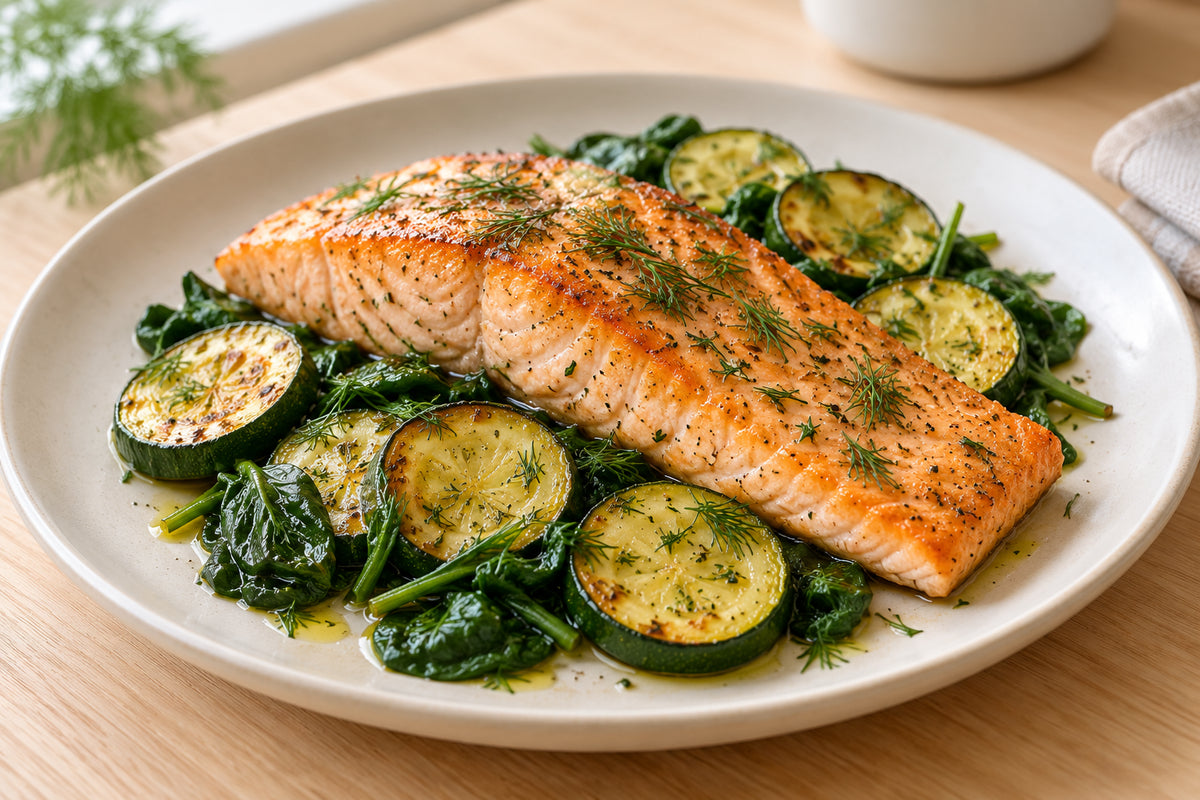
A straightforward oven dinner with plain salmon, zucchini and spinach. Dill and olive oil keep the seasoning simple, without a sweet glaze or flour-thickened sauce.
Dietary context: CSID tolerance to sucrose and starch differs. Adapt this meal idea with your dietitian; it is not a sucrose-free or starch-free prescription. Vegetables contain natural sugars. Follow your established portions and treatment plan.
Meal: Dinner
Serves: 4
Preparation: 10 minutes
Cooking: 25 minutes
Total: 35 minutes
Ingredients
- 600 g plain boneless salmon fillet, cut into 4 portions
- 400 g zucchini, cut into 1 cm half-moons
- 120 g baby spinach, washed
- 30 mL olive oil, divided
- 10 g fresh dill, chopped
- 30 mL water
Method
- Heat the oven to 200°C conventional or 180°C fan-forced. Line a shallow roasting tray.
- Toss the zucchini with 20 mL oil and spread on the tray. Roast for 10 minutes.
- Check the salmon carefully for bones. Put it among the zucchini, brush with the remaining 10 mL oil and scatter over the dill.
- Roast for 12–15 minutes, depending on thickness, until the salmon is opaque through the thickest part and separates easily with a fork. Continue cooking if the centre is still translucent.
- While the fish cooks, place the spinach and water in a saucepan. Cover and cook over low heat for 2–3 minutes until wilted. Drain any excess water and serve with the salmon and zucchini.
Make it fit your needs
- Contains fish. Use plain, unglazed fillets; check for bones before serving.
- This recipe does not include potato, rice or a grain side. A tolerated starch portion can be served separately according to your individual plan.
- This CSID recipe is not a low-histamine recipe; the two dietary approaches address different concerns.
Storage and handling
Serve freshly cooked. Chill any leftovers promptly in shallow containers at 5°C or colder; use within 2 days or freeze. Reheat quickly until piping hot.
Keep raw meat separate from ready-to-eat ingredients. Follow food-safety guidance and the storage directions on your ingredients.
Further reading
Read the clinical guidance on sucrase-isomaltase deficiency and our sucrose and starch guide. Explore more recipe ideas.